
Low-cost SO-101 arms that type, drive screws and stack cups, all in simulation.
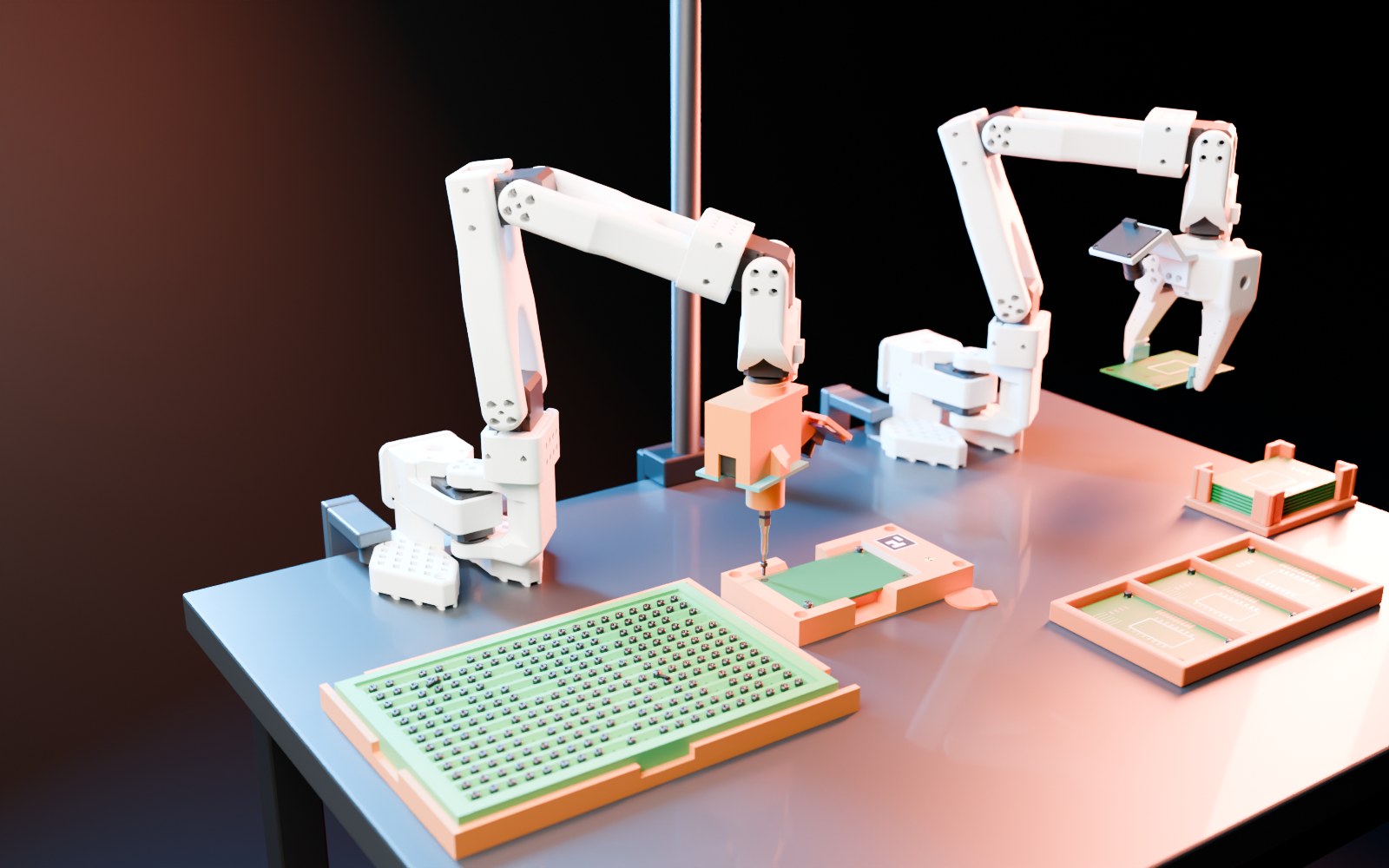
The SO-101 is a low-cost robot arm with an open design from TheRobotStudio. Every number on this page is from simulation, none from a real robot. Each row below has its own test, so read them one at a time. A fresh or held-out scene is one that was never used for tuning. A practice run comes from the scenes used during development.
| Result | Test | Detail |
|---|---|---|
| 90% | right key on the first press, on key “h” only, 500 fresh test scenes | 87% on keyboards it never saw |
| 97.8% | of 320 practice runs typed ‘hello world’ perfectly, fixing its own typos | |
| 2.3 mm | median fingertip miss | |
| 95.5% | screws fastened, with retries, over 200 fresh runs | 0 falsely reported done |
| 1.1 mm | median error measuring cup rims | 3 of 6 held-out scenes stacked |
Typing: one key on new scenes, one phrase in practice
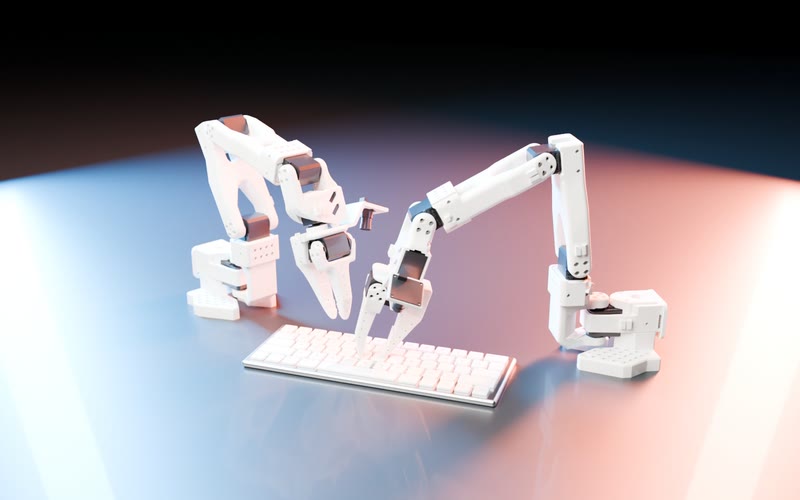
The first test is a single key: the “h” that starts “hello world”. It ran on 500 fresh scenes, then on 500 more with keyboards from a pool it had never seen. A scene counts only if the first press lands on the right key and no stray key follows in the next second.
The keyboards it never saw scored a little lower. This is still one key, so it doesn’t say how every key would do. The 2.3 mm in the table is a separate measure, taken on a different set of 500 scenes that was also used during development.
The phrase test is a different setup: 320 practice runs typing ‘hello world’, with typos fixed along the way, and 313 came out perfect. They are practice runs, so they show what it can do on scenes from development, not on new ones. The keyboard below scores each key across practice runs.
The letter b and backspace are the weakest keys. Nothing was missed on c, m or u, though each had only about 100 tries. The range after each score shows how sure that number is, given how many tries the key had.
Automatic key finder: finds keys on its own. Never picked a wrong lowercase key in 168 lookups, though it came back empty 7 times. Capitals had one wrong pick in 140, when it pointed at Command for left Shift.
| Key finder | Lookups | Right | Wrong | Not found |
|---|---|---|---|---|
| Lowercase | 168 | 161 | 0 | 7 |
| Capitals | 140 | 131 | 1 | 8 |
Screws: 200 runs, no false finishes
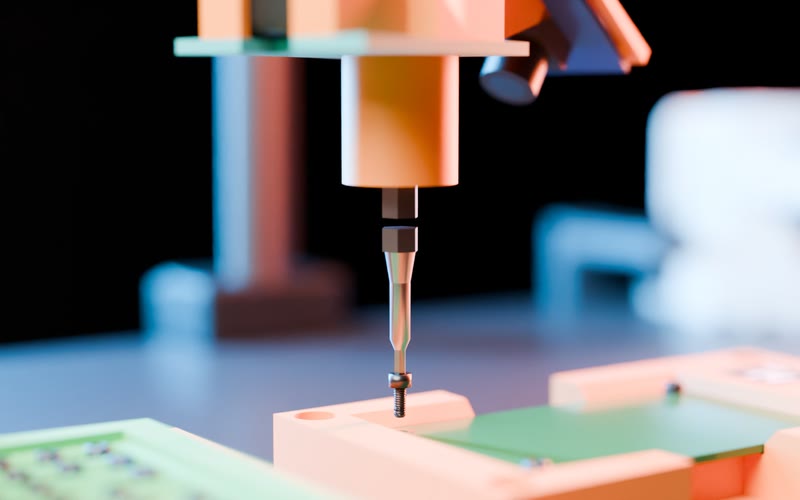
The job is to pick up an M2.5 screw, start it in a hole and drive it in. The clip shows one run where that goes wrong, and it isn’t one of the test runs counted below.
The test is 200 fresh runs with no failures added on purpose. Each run ends one of three ways: fastened first try, fastened after a retry, or left for a person.
- 144 fastened first try
- 47 fastened after a retry
- 9 left for a person
It never reported a screw as done when it wasn’t. A false “done” is the failure a person wouldn’t notice until later. Screws took about 48 seconds each on average. The thread, torque and damage rules in the simulation are guesses, so these numbers don’t carry over to hardware as they are.
Cups: good at measuring, weaker at stacking
The job is to look at a desk with three or four cups, measure each one, work out which fits inside which, and stack them. The test is six held-out scenes.
Measuring is the strong part. It found all 21 cups across the six scenes, and the rim sizes came out close. Base size is the weakest measurement, with one miss of 12.8 mm.
| 21 cups | Median error | Worst error |
|---|---|---|
| Rim | 1.1 mm | 2.5 mm |
| Height | 2.1 mm | 2.7 mm |
| Base | 2.9 mm | 12.8 mm |
Stacking is weaker. A stack needs every step to work, and 6 of the 10 steps did. Finding every cup in a scene didn’t guarantee a finished stack.
| Scene | Cups found | Steps that worked | Stacked |
|---|---|---|---|
| 1 | 3 of 3 | 1 of 1 | Yes |
| 2 | 4 of 4 | 2 of 3 | No |
| 3 | 4 of 4 | 0 of 2 | No |
| 4 | 3 of 3 | 1 of 1 | Yes |
| 5 | 4 of 4 | 2 of 2 | Yes |
| 6 | 3 of 3 | 0 of 1 | No |
SO-101 robot model: TheRobotStudio, Apache-2.0